
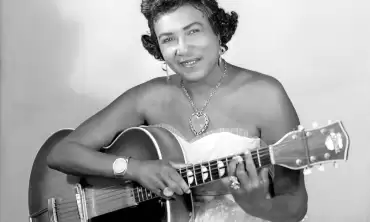
Navigating Hostile Environments, Negotiating Power and Authority
Written By: Lamont Jack Pearley
The sexualization of Black women in entertainment is neither a recent nor peripheral phenomenon. From Lucille Bogan and Ma Rainey to Koko Taylor and Etta James, and now to their artistic descendants like Lil’ Kim, Nicki Minaj, and Megan Thee Stallion, Black women artists have long contended with gender performance, coded expression, and power dynamics. Whether for survival, self-assertion, performance, or profit, they have continually shaped and reshaped public perceptions of their bodies, sexuality, and agency.
At first glance, today’s artists may appear to subvert dominant paradigms by owning their sexual narratives, but is this truly a reversal of gendered power? Or are we witnessing a continued negotiation, a dynamic interplay of power, agency, and authority that echoes the strategies of the classic Blues women? This essay traces the historical, social, and performative contexts in which Black Blues women have navigated hostile environments and contested spaces, arguing that their artistic output reflects a nuanced negotiation of power, not simply a performance of hypersexuality.
My initial approach to this topic began with an exploration of the white male gaze, particularly the ways in which Black women’s sexuality in Blues performance has been historically filtered through white male fantasies. I considered the legacy of Saartjie Baartman, known as the “Hottentot Venus,” whose public exhibition in 19th-century Europe marks one of the earliest documented cases of the fetishization and commodification of the Black female body for entertainment.
This context of voyeurism and consumption is central to understanding the legacy of the Classic Blues era. Women like Bessie Smith and Ma Rainey operated within a system that at once demanded their sexualized performances while marginalizing their autonomy. However, as I progressed in my research and fieldwork, it became evident that this was only part of the story.
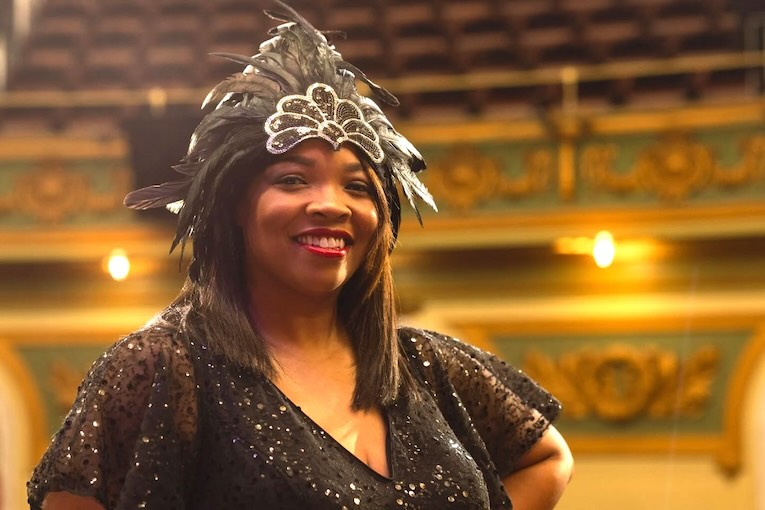
My first interview with Candice Ivory, a singer, professor, and cultural practitioner, fundamentally reframed my inquiry. Speaking on the challenges Black women face in the Blues circuit, Ivory stated:
“You gotta be some kind of bold to do a lot of that by yourself. And it’s a way you gotta move out there.”
Her statement redirected my focus: this project was not simply about gender performance or sexual imagery; it was about how Black Blues women survive and succeed in hostile, male-dominated spaces. It was about navigating the terrain of power and asserting authority where both are historically denied.
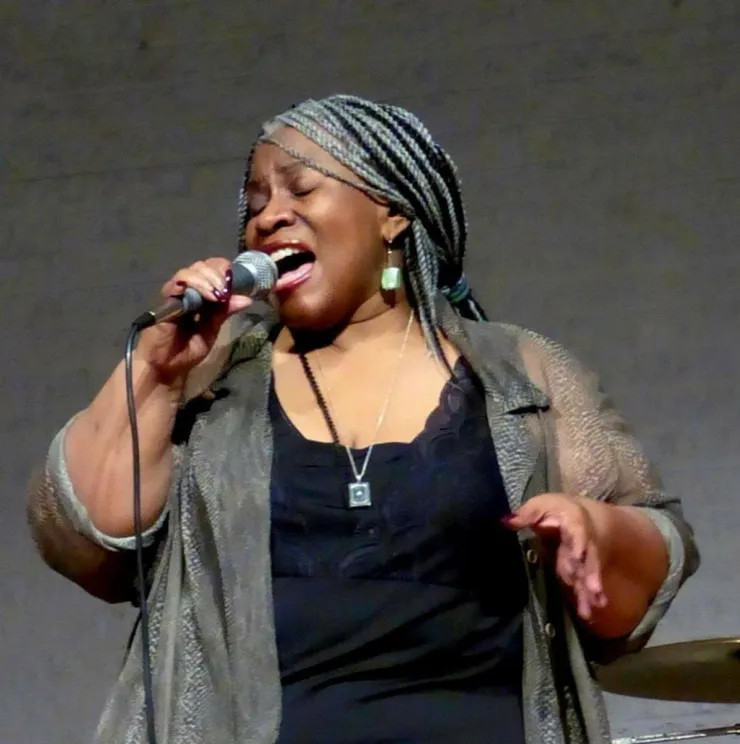
This theme was echoed by Doris Fields (aka Lady D), a seasoned performer known as West Virginia’s First Lady of Soul. Through her one-woman show The Lady and the Empress, Fields channels Bessie Smith, embodying both her vulnerability and defiance. Fields shared:
“Black Blues women were being who they were—formed by their upbringing and environment before being placed in the public eye.”
Both Fields and Ivory challenge the simplistic notion of hypersexuality as spectacle. Instead, they suggest that Blues women have always used performance to negotiate survival in environments that were often physically, socially, and economically dangerous.
Ivory emphasized the distinction between “a woman in Blues” and “a Blues woman”: the latter lives the culture, embodies its survival ethos, and often has no choice but to “play the hand she’s dealt.” This view aligns with Wesley John Work III’s American Negro Songs, which distinguishes the spiritual’s hopeful outlook from the Blues singer’s resigned pragmatism:
“The Spirituals sing of heaven… The Blues singer has no interest in heaven, and not much hope in earth—a thoroughly delusional individual.”
That “delusion” is not escapist; it is a reflection of lived trauma, navigated through song. Memphis Minnie, for instance, famously sang:
“I stood on the corner all night long… I didn’t make me no money, Bob, and I can’t go back home.”
Her songs suggest survival strategies, through gambling, sex work, or hustling, not as moral failures, but as responses to a system of economic desperation. Minnie was rumored to be a sex worker, a claim which, whether true or not, reflects the common association of Black female performers with commodified sexuality. Yet, as Ivory points out,
“If that were true… well, that’s the commodification situation here. This is something that I possess and can control.”
Candice Ivory also notes that many early Blues women were part of the LGBTQ+ community, adding another dimension to how gender, sexuality, and performance intersected. Artists like Ma Rainey and Bessie Smith, both known to have relationships with women, were powerful and influential figures who often defied heteronormative expectations. Their public and private lives reflected resistance not only to racial and gender hierarchies but to sexual conformity.
Fields reflects on Bessie Smith’s resilience in the face of such adversity:
“She started as a child street performer… She had to learn how to talk her way into and out of situations… and protect herself with her fists or a blade if needed.”
This narrative of self-reliance and streetwise negotiation echoes across time, from the juke joints of the Delta to the nightclubs and studios of today’s music industry.
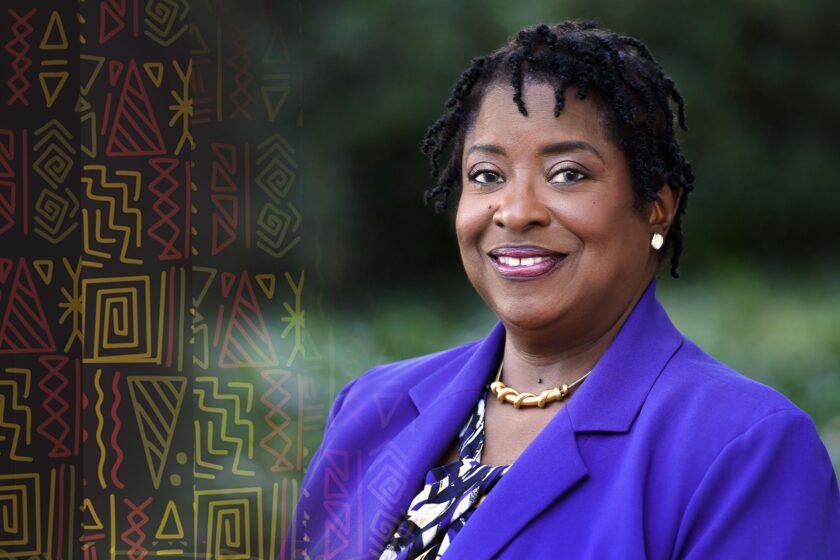
Cheryl L. Keyes, in her essay “We’re More Than a Novelty, Boys,” draws a direct connection between Blues women and female rappers. She tracks the lineage of Black expressive forms from the folk ballads and toasts of the South to the rise of Hip Hop. Early rappers like Roxanne Shante channeled the aggression and confidence of predecessors like Millie Jackson, who herself started as a Blues ballad singer.
As Keyes notes, many women in Hip Hop adopted masculine-coded behavior not out of mimicry, but out of necessity, to survive in a genre defined by male dominance. In this way, artists like Little Kim mirror the strategies of Ma Rainey and Bessie Smith: leveraging performance, sexuality, and narrative control as tools for power.
When I asked Doris Fields about Ma Rainey and Bessie Smith’s authority, she acknowledged:
“They definitely had power… but still had to depend on white people for the jobs that would pay them.”
This observation underscores a central tension: Black Blues women may possess personal power and cultural influence, but structural authority, especially in terms of finances, bookings, and industry control, often remains elusive.
Candice Ivory reminds us,
“This is a business, too. This was them taking power for themselves in a very unfriendly place.”
And in that business, sexuality is both a tool and a trap, something to be performed, sold, and sometimes weaponized, but also a site of autonomy.
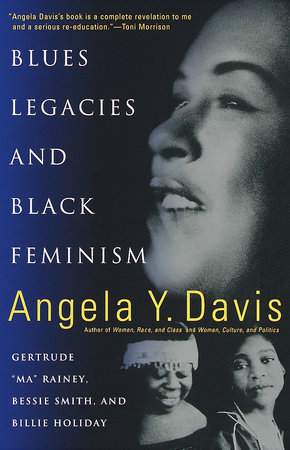
Angela Davis, in Blues Legacies and Black Feminism, explores the radical honesty of Blues lyrics and the coded feminist messages embedded within them. In one example, she discusses Ma Rainey’s “Hustlin’ Blues,” where the protagonist rejects abuse, reports her pimp, and chooses a new path. As Hazel Carby notes, the song “articulates the possibility that a woman can leave… end sexual exploitation.”
This act, reporting a man to the authorities, was revolutionary. It signifies a shift from survival to authority, from silence to action. And it reflects the broader theme of this essay: Black Blues women as agents of their own narratives, navigating hostile environments with resilience and self-determination.
Black Blues women have always negotiated power and authority in complicated, often contradictory ways. Their performances were not simply about music, sex, or survival, but about asserting presence in a world structured to erase or exploit them.
Whether navigating the juke joints of the Delta, the vaudeville circuits of the 1920s, or the boardrooms and recording studios of today, these women embody the ethos of the Blues:
“It is what it is.”
Not as resignation, but as resolve.
They have power. They have authority. But the struggle continues.
If this speaks to you…
And you believe in uplifting the voices, stories, and power of Black Women in the Blues, in their own words, then I invite you to support this growing series. We’re just getting started.
With your sponsorship, I can continue documenting, interviewing, and amplifying the journeys of the women who are the Blues—past, present, and rising.
Sponsor the series, Help preserve our history, Help tell the truth, Help us pass the mic—not just the music.
Selected Bibliography:
- Work III, John Wesley. American Negro Songs and Spirituals. Dover, 1940.
- Garon, Paul & Beth. Woman with a Guitar: Memphis Minnie’s Blues. Da Capo Press, 1992.
- Scott, R. Michelle. Blues Empress in Black Chattanooga. University of Illinois Press, 2008.
- Keyes, Cheryl L. “We’re More Than a Novelty, Boys.” In Feminist Messages: Coding in Women’s Folk Culture, University of Illinois Press, 1993.
- Davis, Angela Y. Blues Legacies and Black Feminism. Vintage Books, 1998.
- Abbott, Lynn & Seroff, Doug. The Original Blues: The Emergence of The Blues in African American Vaudeville. University Press of Mississippi, 2017.
- Jones, LeRoi. Blues People: Negro Music in White America. Harper Perennial, 1963.
- Cartwright, Joan. Blues Women: The First Civil Rights Workers. 2014.